

Corporal John K. Goeken, U.S. Marine Corps – Two Wars, Three Deployments, and a Commitment to the Corps
Those who want to become U.S. Marines must have, or want to develop, the self-confidence, courage, and swagger necessary to confront enemies without ever thinking of backing down. They know they will win the fight, no matter what the odds—and their enemies know it, too. Corporal John K. Goeken, U.S. Marine Corps, has those qualities in spades. In fact, they compelled him to join the Marine Corps and deploy to Iraq and Afghanistan a total of three times while wearing the uniform. Once back in civilian life, they drove him to return to Afghanistan as a contractor providing security for U.S. government facilities and personnel. Now he is channeling those qualities to become an engineer.
John was born at Fort Bragg, North Carolina, in June 1986. At the time, his father was in the Army’s 82nd Airborne Division, serving as a parachute rigger. When his father deployed to Korea on an unaccompanied tour, John’s mother stayed behind with John and his siblings. That living arrangement lasted until his parent’s marriage dissolved when John was five. His mother then loaded John and his brother and two sisters into a beat-up old station wagon and drove them across the country to Desert Hot Springs in Riverside County, California, to be closer to her family. Once settled in, she did her best to raise her family in an area wracked by gang violence and poverty.
When John was in elementary school, his father re-entered the picture. His father lived in Alton, Illinois, so John rotated between his mother’s home in California and his father’s home in Illinois. Eventually, John decided to stay permanently with his father because he thought that would help his mother financially. John’s decision was difficult because his father had his own struggles to deal with, but still John thought it the best course of action.
Once living with his father, John attended Alton Middle School for a year, followed by Alton High School. He desperately wanted to play sports, but his father could not drive him to practices or games. As a result, John was unable to participate in any extracurricular activities. When his father rented a home in a trailer park during John’s freshman year, John’s living arrangements stabilized enough for him to work at the Moonlight Restaurant bussing tables and catering events. John also made friends with another boy in the trailer park, and they spent their free time skateboarding around the town together.
During John’s senior year, he looked ahead to his future and saw the military. In fact, he felt like the decision was preordained. One of his earliest memories was running out into an open field at Fort Bragg and watching parachutes float softly to earth during an exercise his father took him to. Going back even further, his grandfather served in World War II. Although his father and grandfather both served in the Army, John favored the Marine Corps. He wanted to graduate from high school early and enlist as soon as he turned seventeen, but his father wouldn’t give him permission. As a compromise, John entered the Marine Corps’ Delayed Entry Program during his senior year, but with an active-duty report date in the summer after his eighteenth birthday.
John graduated from Alton High School in June 2004. Two weeks later, his father and brother drove him to the St. Louis Military Entrance Processing Station. There, on June 21, 2004, John took the oath to support and defend the Constitution, officially beginning his Marine Corps career. He then flew with other new recruits to San Diego, where a bus took them to Marine Corps Recruit Depot (MCRD), San Diego, for boot camp. As soon as the bus arrived at MCRD, a drill instructor boarded and yelled “get off my bus and stand on the yellow footprints outside.” Even though he expected it, John was in shock. The scene was like something right out of the movies.
The drill instructors immediately started stripping away the recruits’ individual identities to begin molding them into a team. Each recruit had to cram all his personal possessions into a small box, trading in his civilian clothes for Marine Corps physical training (PT) gear. They then went to a barracks with an open berthing area containing about 100 bunks, with drill instructors yelling at them all the way. For the next week, they remained in a holding pattern as more recruits continued to arrive. On the second night as John and other guys cried themselves to sleep, he wondered what in the world he had gotten himself into.
About a week later, John found out when the real thirteen-week boot camp experience officially began with him and the other recruits being assigned to their training platoons. Although John was naturally athletic and had started training with his dad before heading off to boot camp, the daily runs initially proved difficult. He soon got into excellent shape and did well at all the physical training. He also excelled at marksmanship, where his keen eyesight allowed him to hit distant targets with pinpoint accuracy.
Despite his success at the training events, John was often confrontational, which got him on the wrong side of some of his drill instructors. On one occasion, his platoon was instructed to have their gear out and ready for PT early the next morning. In the middle of the night, John’s senior drill instructor came to the barracks and started yelling about why the gear was out. All the recruits stood at attention by their bunks and when the senior drill instructor asked again, John responded, “Sir, we have PT in the morning.” The senior drill instructor replied, “What did you say?” John repeated himself, and the drill instructor cracked him in the head with a flashlight.
The next morning, another of the platoon’s drill instructors came into the barracks to inspect the recruits and found John with blood covering his face and t-shirt. He asked what had happened, and John told him. Not liking the answer, the drill instructor asked again. This time, John replied, “I ran into a window.” From that point on, the drill instructors laid off John because they knew the senior drill instructor had made a big mistake. The situation came in handy when John developed an ingrown toenail. Instead of being afraid to ask for help and living with the pain, he reported his problem and was permitted to go to sick call to get it resolved even though it involved missing some of the platoon’s training.

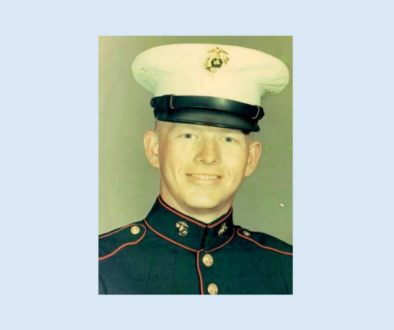
After successfully completing the “Crucible” training event during his final week of boot camp, John earned the privilege of being called a Marine. Out of the eighty-six new Marines graduating with him, he was one of only six slated to be a rifleman, with all the others designated for a wide range of other fields. John’s mother came to his final parade at boot camp in September 2004, where he was introduced to her as a Marine for the first time.
John’s next stop was the School of Infantry at Camp Pendleton, located about forty-five miles north of MCRD San Diego. There John learned advanced infantry tactics, including how to fire and maintain all the basic Marine infantry weapons, how to prepare defensive positions, how to patrol, and how to survive in combat conditions. John loved the school because it taught him how to do all the things he’d joined the Marine Corps to do. Still, the instructors were tough, conditioning John and the other new Marines to endure long marches up and down hills carrying up to eighty pounds of gear so they would be physically fit and ready to fight in any conditions once they graduated.
Toward the end of the School of Infantry, a problem with John’s legs that had started during boot camp worsened. On the morning of graduation, John was doing sit-ups after a run and told his partner not to hold him in place by sitting on his feet because it was too painful. When the supervising sergeant walked by and saw the grapefruit sized bumps on John’s calves, he told John to go to medical right away. John pleaded with him to let him graduate, but the sergeant told him the bumps looked too serious to wait. As John made his way to medical, he could see the other Marines in his cohort heading to the graduation ceremony. John was devastated.
The examining doctor didn’t know what John’s condition was, so she pulled out a large medical volume to help make the diagnosis. She determined it might be “compartment syndrome,” but recognized John needed to see a specialist. In January 2005, the specialist confirmed the diagnosis by repeatedly inserting giant needles into John’s calves, causing more pain than the condition itself. The specialist told John he had two choices. He could take this as an opportunity to get out of the Marines, or he could undergo surgery on each leg to remedy the condition. It was an easy decision for John—he asked the doctor to schedule the surgeries.
Although the surgeries were successful, the recuperation period was long. In fact, John grew so restless that he convinced the administrative staff to transfer him before he completed the full physical therapy regimen he had been prescribed—a decision that would haunt him later. He left Camp Pendleton in June 2005 to attend Marine Corps Security Force Training in Chesapeake, Virginia, and close quarter combat training at the nearby Dam Neck Annex in Virginia Beach. There he learned the skills he needed to fight and clear confined spaces, such as those that might be found in urban settings. He also learned how to provide security for high value and sensitive government facilities, like Navy bases and weapons stations.
After completing the training, John reported for duty in September 2005 with Marine Corps Security Force Bahrain, located on the island of Bahrain off the coast of Saudi Arabia in the Persian Gulf. Within of month of reporting, his unit designated him for advanced marksmanship training back at Dam Neck in Virginia. However, because John hadn’t completed all the required physical therapy after his surgery, the demands of the training proved too much for his legs and he failed the school. Accordingly, in November 2005, he was sent to Norfolk, Virginia, where he received an administrative punishment from his commanding officer at “office hours” for minor misconduct, delaying his return to Bahrain until April 2006.
Once back in Bahrain, John and his platoon trained among themselves and with the Bahraini police and military. John’s legs continued to bother him and he grew depressed. In dealing with the depression, he was again involved in minor misconduct and disciplined at office hours by his commanding officer.

In September 2006, John transferred to the 3rd Battalion, 4th Marines, located at the Marine Corps Air Ground Combat Center Twentynine Palms, just forty-five miles from where John grew up in Desert Hot Springs with his mother. He was assigned to Kilo Company, 1st platoon, where he made many good friends and got his first taste of life in the Fleet Marine Force.
In a sense, John’s routine in the 1st platoon reverted to what it had been like at boot camp. Physical training remained a key part of every day, although this time, John was put in charge of his platoon’s physical fitness training and could dish out the workouts rather than just participate in them. To make sure his platoon was in the best shape possible, John conducted events like early-morning fourteen-mile runs through the desert, sometimes with platoon members carrying logs for a portion of the run to foster teamwork and endurance. The team also spent hours in the gym working out when the hot desert sun made it too dangerous to exercise outside.
In addition to the intense physical training, John’s platoon routinely trained with their weapons at the ranges, conducted tactical exercises on the base’s rough and varied terrain, and renewed its urban assault skills. To make the training as real as possible, the base hired Iraqi and Afghan actors to play the roles of the people John’s platoon had to deal with. On one occasion, John came across someone who appeared to have had his leg amputated, with blood spurting from his wound. It turned out to be an amputee hired by the base to take the training to the next level. It worked, as John forgot it was an exercise and dealt with the situation as if it were real.
In February 2008, John’s platoon got to put its training to the test when it deployed with the 3rd Battalion, 4th Marines, to Iraq as part of Operation Iraqi Freedom. The battalion initially flew from San Diego to Kuwait, where the Marines staged with their equipment and acclimated to the new environment. John’s platoon then flew into Al-Asad Airbase in Anbar Province, before driving in trucks to Command Outpost (COP) HAQ, located about half-a-mile outside the town of Haqlaniyah and about five miles from Haditha. There they were responsible for patrolling in Haqlaniyah and its vicinity for possible insurgent activity and weapons caches, manning entry control points, training the Iraqi police, and generally maintaining security in the area.
Although John’s platoon was not involved in any firefights with Iraqi insurgents during the deployment, the war left a lasting impression on John. One tragedy, in particular, stands out for him as an unnecessary consequence of the war. Not long after John’s platoon assumed responsibility for COP HAQ, he and some fellow Marines were manning an entry control point outside of Haqlaniyah when a doctor drove up with a sick child during a severe sandstorm. Because John’s platoon was new and did not recognize the doctor, they had to positively identify the doctor before she could be permitted to pass. The process proved slow and deadly, because while the platoon was waiting for the doctor to be cleared to proceed, the little girl died—a forgotten casualty of the Iraq War—but never to be forgotten by John.
Aside from a riverine patrol around Haditha Dam Lake looking for weapons caches and enemy fighters, and a Fourth of July fireworks display John’s platoon created with military-issued pyrotechnics, the remainder of the deployment proved uneventful. Accordingly, in September 2008, John and the rest of the 3rd Battalion, 4th Marines, retraced their steps to Twentynine Palms for some well-deserved down time.
In December 2008, John took a temporary assignment to Marine Corps Base Camp Lejeune, North Carolina, to try out for the Marine Corps Special Operations Command (MARSOC). He arrived well before the formal three-week assessment and selection process started. To fill his time, he worked out three times a day, lifting weights, running, swimming, and playing racquetball. He got into great shape, but he also got bored. To fix that, he and some buddies rented hotel rooms in Raleigh, North Carolina, and took a four-day weekend. They all drank too much, and on Sunday, February 22, 2009, John made the fatal mistake of pulling a fire alarm at the hotel. Even worse, when the hotel called the police, he ran and hid in a nearby parking garage. Unfortunately for him, it was the police station parking garage, and he was quickly caught, arrested, and released on his own recognizance.
John knew he had messed up. He reported the incident to the Marine Substance Abuse Coordinator at Camp Lejeune and apologized to the hotel in Raleigh. At his court hearing, the policeman who arrested him spoke on his behalf and the judge issued a Prayer for Judgment Continued, which essentially held the charges against John in limbo indefinitely. The practical effect was, if he did not get into trouble again, he would not be found guilty or sentenced for the offenses.
John was ecstatic with the court results. He felt like he had been given a new lease on life. His commanding officer (CO), however, did not share his view. The day after the court hearing, he summoned John for office hours and asked John what he thought about the results. John said he was fortunate and explained all the steps he’d taken to address the incident over the last month. The CO then asked John when he thought the moment of change was for him. John replied February 22, because that was when he committed to addressing his behavior. The CO said that was not right—it was instead right now. He hammered John, reducing him in rank to lance corporal, fining him, and restricting him to the base. He also removed John from the MARSOC training pipeline.
John could not believe it. Just the day before, he thought he’d put the incident and the behavior that caused it behind him. Now, not only was he out of MARSOC, but he also realized with three nonjudicial punishments in his record, the Marines would not be a viable career option for him. Still, he knew he had to make the best of the situation and finish out his enlistment strong.
To get back into the game, John contacted his detailer and volunteered for any unit getting ready to deploy to Iraq or Afghanistan. The detailer offered two options: one a battalion getting ready to deploy overseas as part of a Marine Expeditionary Unit, and the other his former unit, the 3rd Battalion, 4th Marines, at Twentynine Palms. Not wanting to spend months on end at sea, he opted to return to his former unit in June 2009.
Once back with the 3rd Battalion, 4th Marines, John was assigned to the battalion’s “JUMP” platoon, which was part of the Headquarters & Service (H&S) Company. His platoon’s primary mission was to provide security for the battalion commander, as well as to provide support or reinforcements for Marines needing assistance or extraction. In short, John and his comrades had to be ready to “jump” into action wherever needed.
The members of John’s JUMP platoon trained around the clock. During the day, they conducted their scheduled training on the ranges around Twentynine Palms with other elements of the battalion. After everyone finished, the platoon’s staff sergeant had the unit mount up again at night for additional training. This involved driving their HUMVEES across the harrowing desert and hilly terrain using only their night vision goggles to navigate in the dark. More than once, John was sure they would roll their vehicle on a steep slope and die. Over time, though, they became experts at driving in rough terrain at night, a skill that would soon prove useful.

In October 2009, John and the JUMP platoon deployed with the 3rd Battalion, 4th Marines, to Afghanistan as part of Operation Enduring Freedom. After initially flying into Camp Leatherneck in the Helmand Province, John flew with the battalion commander and the H&S Company to Forward Operating Base (FOB) Delaram in the Nimruz Province, approximately fifty miles northwest of Camp Leatherneck.
In December 2009, the 3rd Battalion, 4th Marines, assisted with clearing the Now Zad Valley, about sixty miles north of Camp Leatherneck. To play its part in what was officially labeled Operation Cobra’s Anger, the JUMP platoon drove with the battalion commander in Mine-Resistant Ambush Protected vehicles (MRAPs) from FOB Delaram to Camp Leatherneck, where they rendezvoused with additional forces and picked up equipment and supplies. They then convoyed with the battalion for two days north into the mountainous region around Now Zad. John and the JUMP platoon were not directly involved in the fighting. However, they did have to deal with other issues, like fixing a flat tire on a heavily armored MRAP in mountainous terrain. Not only was changing the tire difficult because they didn’t have the equipment they needed, but doing so also left them exposed to possible Taliban ambush while the vehicle was disabled. Fortunately, they changed the tire and continued on their way without further incident.
Once the Marines secured Now Zad, the JUMP platoon and other elements of the 3rd Battalion, 4th Marines, started making their way back to FOB Delaram via Camp Leatherneck. The goal was to arrive in time for Camp Leatherneck’s feast on Christmas Day. However, with their destination in sight, the heavy MRAPs became bogged down in the farmland leading up to the camp and Christmas dinner slipped away.
John and the JUMP platoon also routinely patrolled and cleared the roads around FOB Delaram. This involved attaching a mine roller that extended out in front of an MRAP and then driving down the roads to detonate any mines before they could destroy a vehicle. Although this worked with IEDs rigged with pressure plates, it did not work with remotely detonated or time detonated IEDs. For example, the Taliban set time detonated IEDs to explode a certain number of seconds after a mine roller went over the IED, likely damaging or destroying one of the MRAPs following in the mine-rolling convoy. While John’s group never encountered one of these timed IEDs, others did.
John also participated in traps intended to lure Taliban fighters into an ambush. To do this, a combat assault team (CAT) would pretend to hit an IED to make it look like they were vulnerable. If the Taliban took the bait, the Marines would destroy them. During one such mission, the Taliban did not attack the combat-ready CAT, so it decided to try another location. On the way there, one of the CAT’s vehicles hit a real IED and was disabled. As John’s MRAP approached the damaged vehicle, the gunner atop his vehicle engaged the Taliban with his .50-caliber machine gun. It was the first time anyone in the JUMP platoon had engaged the Taliban in combat.
Another routine JUMP platoon mission involved escorting the battalion commander on visits to Marine outposts in the surrounding area. As part of these visits, they would bring the Marines supplies and clear the roads leading to and from the outpost. All the time, they had to be vigilant for IEDs. At least one Marine from the 3rd Battalion, 4th Marines, was killed by an IED during the deployment, while others were injured from the blasts. John escaped injury during this deployment, but his turn would come on the next.
The 3rd Battalion, 4th Marines, returned to Twentynine Palms in May 2010 after seven months in Afghanistan. Once again, there was down time immediately after the deployment, followed by workups in preparation for the battalion’s next rotation overseas. John remained part of the JUMP platoon, although many of the Marines he’d previously deployed with had since transferred to other units and been replaced.
JUMP platoon manning was not the only thing that changed. Organizationally, the platoon shifted from being a part of the H&S Company to being attached directly to Weapons Company. In addition, the most gung-ho gunnery sergeant (gunny) John had ever met took charge of combat training for the JUMP platoon and all three of Weapons Company’s CATs. The gunny pushed the Marines to their physical limits, marching them for miles while they each carried 100 pounds of gear. He also made sure every Marine was proficient with anti-tank weapons and the squad automatic weapon, or SAW. His goal was to make sure the JUMP platoon and the CATs were the most combat-ready teams possible. As if all this wasn’t enough, John rounded out this training by enhancing his hand-to-hand combat skills at the Marine Corps Martial Arts School.

The JUMP platoon got the opportunity to put its training to use when the 3rd Battalion, 4th Marines, again deployed to Afghanistan in April 2011. This time John found himself at Command Outpost (COP) Ouellette in the Upper Gereshk Valley of the Helmand Province. There, his unit was responsible for clearing and providing security for Route 611, which fed into the Highway 1 “Ring Road”—Afghanistan’s primary national highway. John and his team also visited other Marine outposts with the battalion commander, providing security for the trips.
This deployment proved much more kinetic for John than his previous two. For one mission on June 13, 2011, the JUMP platoon was tasked with providing security for Afghan contractors repairing a stretch of Route 611 near a UK contractor’s compound. As John and other members of his team were walking with the UK contractor, a Taliban fighter fired on their position, resulting in a small firefight until the fighter ran away. As work on the road continued, Taliban fighters repeatedly took the working party under fire trying to impede its progress. One round barely missed John’s head, although he did not know it until the UK contractor brought it to his attention.
Later that same day at another location, a Taliban machine gunner started firing at John’s platoon and the working party. Unimpressed, John walked to where the Afghan contractors were working and directed them to take cover in their trucks. He also marked the Taliban positions using his grenade launcher and returned fire until the threat from the enemy subsided. For his bravery under fire, John was awarded the Navy and Marine Corps Achievement Medal with Valor.
The Taliban also repeatedly hid IEDs over the stretch of road patrolled by the battalion, and the JUMP platoon was tasked with retrieving any vehicles they disabled. At one decommissioned gas station, an explosive ordnance disposal (EOD) technician found twelve IEDs before John directed him to stop looking any further due to the danger involved.
The first time John was in an MRAP that struck an IED, he was shaken up by the explosion. Later in the deployment, he was again shaken up when a Taliban recoilless rifle round slammed into the HESCO barrier protecting the battalion headquarters building he was working in. Then, on August 11, 2011, an MRAP he was in hit a powerful IED, causing a massive explosion. Although the MRAP’s blast-diffusing armored undercarriage saved John’s life, he was knocked unconscious and suffered a concussion and mild Traumatic Brain Injury (TBI). He was awarded a Purple Heart as a result of his TBI.

During an unexploded ordnance clearance mission, John’s team cordoned off an area surrounding an IED. While they waited for an EOD technician to arrive, a young girl carrying her baby sister wandered into the area and walked up to the IED. Without hesitating, John ran into the area and scooped up the girl and the baby and carried them to safety. John still wonders what became of the two girls, especially after the Taliban reasserted control over Afghanistan.
John’s second Afghanistan deployment ended in October 2011 when the 3rd Battalion, 4th Marines, returned to Twentynine Palms. After some much-needed rest, John was assigned to the battalion’s operations section (S-3). Then, in March 2012, he was dispatched on temporary additional duty orders to Bahrain. This time, he was part of a contingent setting up U.S. Marine Corps Central Command (Forward). Now a corporal, John worked eight- to twelve-hour shifts in the combat operations center and honed his boxing skills in his free time. He stayed there until October 2012, when he returned to Twentynine Palms after being awarded his second Navy and Marine Corps Achievement Medal in recognition of his efforts.
By this time, John’s discharge date was fast approaching. Accordingly, he focused on the things he needed to do to transition back to civilian life, although his vision for life as a civilian did not differ much from what his life in the Marine Corps had been. In fact, just four months after John received his honorable discharge on July 21, 2013, he was back in Afghanistan working as a contractor providing armed security for Camp Leatherneck. He remained there until July 2014, when he took a position in Texas working in the oil industry after a short stint in Illinois. When that job ended, he took another contract position in Afghanistan providing armed security for the U.S. State Department in Kandahar and Kabul. Not only did John enjoy this work, but he also met another State Department contractor, Phoebe Mbuvi, while there. Despite their frequent travels around Afghanistan and to and from the United States, their relationship blossomed.
Once John’s contract work with the State Department ended, he took a private security position in the United States providing bodyguard services for celebrities like Miley Cyrus. That transitioned into providing security for Jim Irsay, then the owner of the Indianapolis Colts. He traveled with Mr. Irsay wherever he went until a special contract security position he had been waiting for opened for him in Afghanistan. Because the position allowed him to rotate back to the United States every three months, he and Phoebe were able to get married in December 2020. John continued to rotate in and out of Afghanistan until May 2022.
John and Phoebe now live in the Champaign/Urbana area of central Illinois. John is pursuing his electrical engineering degree using the Veteran Readiness and Employment Program and Phoebe is pursuing a doctorate in Information Sciences on a scholarship. As if their studies weren’t enough to keep them busy, they have two wonderful children to occupy their time.
Voices to Veterans is proud to salute Corporal John K. Goeken, U.S. Marine Corps, for his years of dedicated service to our country. Deploying to war zones in Iraq and Afghanistan three times in four years, he went whenever and wherever the Marines needed him most and served with distinction. Once his military service obligation ended, he repeatedly returned to Afghanistan to provide armed contract security for U.S. military and diplomatic installations targeted by the Taliban. Although we can never thank him enough for his combined eighteen years of military and contract security service, we do wish him fair winds and following seas.
Sadly, John was killed in a tragic motorcycle accident on May 2, 2026. He was thirty-nine years old.
If you enjoyed John’s story, please sign up for the Voices to Veterans Spotlight monthly newsletter by clicking here. Once each month, you’ll receive a new written veteran’s story directly in your mailbox. Best of all, it’s free and you can unsubscribe at any time.

May 3, 2026 @ 4:33 PM
Thank you for doing this beautiful article. John was my cousin. He was killed in a motorcycle wreck on May 2nd. This article will bring comfort to our family.
May 5, 2026 @ 11:55 AM
Kirsten – I am so sorry to hear about John. It was an honor to work with him on his story. If there is anything I can do for your family, please don’t hesitate to let me know.
Dave Grogan
May 4, 2026 @ 2:47 PM
John was involved in a fatal accident on May 2nd 2026. He was set to Graduate from the University of Illinois next spring. Life is so cruel to those that deserve more! Rest in Peace Marine!
May 17, 2026 @ 1:45 AM
John was in my platoon on that 2011 deployment. We became, and remained, good friends until he died last week. I was already on my way overseas for another deployment and wasn’t able to make his funeral. I miss him. He was one of the best Marines I’ve ever known. Thank you for writing this article about him, I didn’t even know it existed until today. Glad he’s remembered here.
May 17, 2026 @ 6:07 PM
Rob, Thank you for taking the time to comment on John’s story and for your service in the Marines. I consider it an honor and a privilege to have known John. Stay safe on your deployment.
Dave Grogan