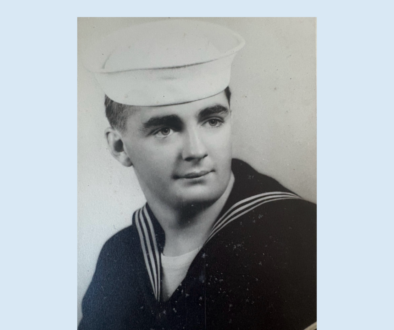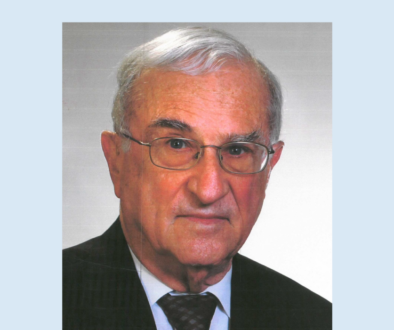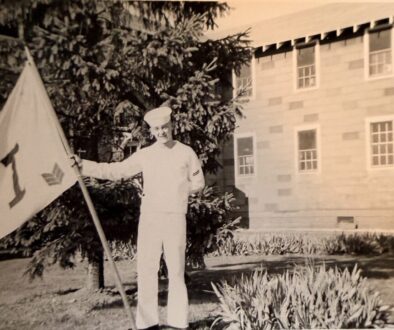
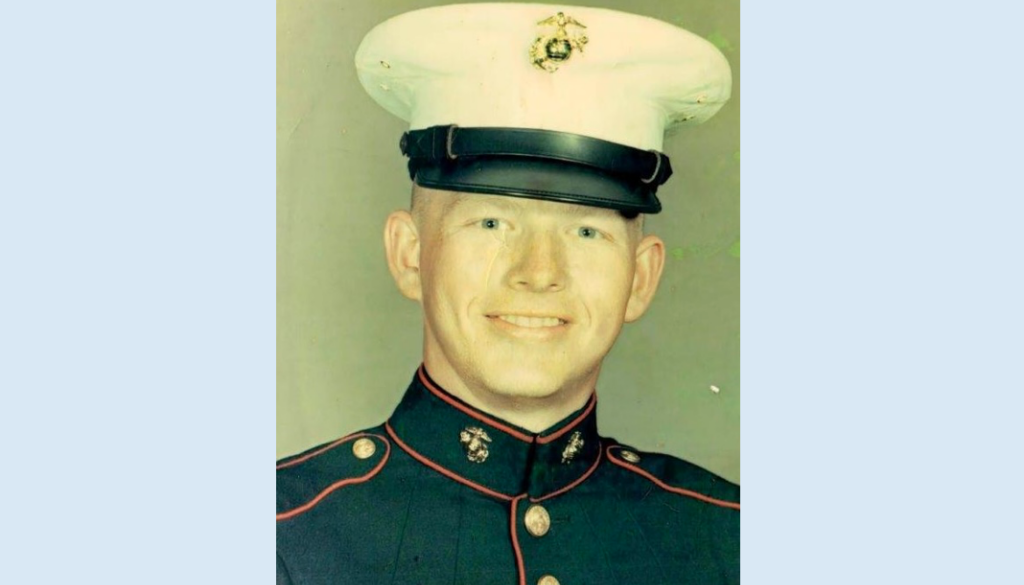
Corporal Robert Potts, U.S. Marine Corps – Deploying to the Dominican Republic and Vietnam
There is no such thing as a former Marine. Once someone earns the privilege of being called a Marine, they wear the honor for life. Perhaps this is because the mental and physical rigors a Marine must endure are so demanding. Perhaps it is because the Marine Corps has built a well-deserved reputation for being an elite fighting force capable of taking on any enemy, anywhere. Or perhaps it is because of the bond fellow Marines form—no matter when or where they served, they are like brothers and sisters to one another. Corporal Robert Potts has been a proud Marine every day of his life since he successfully completed boot camp in 1963. He went on to serve in both the 1965 Dominican Republic intervention and the Vietnam War. To him, there is no greater honor than being a member of the Corps.
Bob was born in Cleveland, Ohio, in May 1944. His father was a private investigator working with a local attorney. During World War II, Bob’s father also helped protect important war-related industries in Cleveland, while Bob’s mother stayed at home raising Bob and his older sister. After the war, Bob’s parents would have four more children. In total, there were six siblings in the family, with the oldest born in 1938 (Margaret) and the youngest in 1959 (Ann), so there were always children running around and keeping Bob’s mother busy.
Given Bob’s parents were devout Catholics, it was only natural that Bob attended St. Edward High School, an all-boys school in the Cleveland suburb of Lakewood where their family eventually moved. Bob played football during his freshman and sophomore years, but then his father told him he would need to get a job to help pay for the cost of school. Bob obliged by working as the night manager at a Lawson’s convenience store. This made for a grueling after-school schedule because after Bob got out of school at 2:30 p.m., he had to rush home, change, eat dinner, and then work at the Lawson’s from 4:00 until closing at 10:00. In the summer, Bob added camp counselor to his resume, working at Beaumont Scout Reservation. Bob loved this job and would himself go on to become an Eagle Scout with Bronze Palm.
As Bob’s senior year at St. Ed’s wound down, Bob had to decide what he wanted to do after high school. Although he had dreams of becoming a naval architect, he felt like achieving that might be a bridge too far, in part because he had good but not great grades in high school—likely due to his undiagnosed dyslexia. Instead, he and his best friend, George Ransom, decided to join the Marines. They had met on their very first day of their freshman year at St. Ed’s and had become like brothers to one another.
Bob and George enlisted for four years in February 1963, but they did not have to report for active duty until June so they could graduate first. When Bob announced their enlistment to his parents, they were not happy. They were especially unhappy with George, thinking he might have convinced Bob to join. Actually, it was the service of Bob’s uncle, who had been a Marine in the Pacific theater of World War II, that turned Bob’s attention to the Marines.
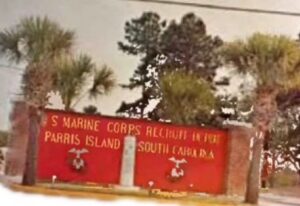
Bob graduated from St. Ed’s in June 1963, and on June 24, he and George reported for active duty at the Federal Building in downtown Cleveland. There, they completed their final physical and took the oath of enlistment before riding a series of buses and trains to the Marine Corps Recruit Depot Parris Island in South Carolina for boot camp. They arrived tired in the middle of the night, only to be welcomed by their waiting drill instructors. The drill instructors started yelling immediately, eventually shepherding them to the receiving barracks. They got two hours of sleep before being roused to eat, get their buzz haircut and uniforms, and complete an endless stream of paperwork. The following day, training began in earnest.
Three drill instructors combined to break down the civilian personas of Bob and his fellow recruits and rebuild them as Marines. They stressed that the recruits needed to be ready to “kill the Commies” and trained them to fight should the time come. The recruits routinely tackled an obstacle course and ran incessantly in the suffocating Parris Island heat and humidity, getting into the best condition of their lives. The white, green, yellow, red, and black flags prescribing permissible outdoor activities became central to Bob’s existence. Whether inside or outside, the drill instructors yelled at the recruits and were physical with them to prepare them for the stress of the battlefield. The least infraction by any of the recruits resulted in countless “bend and thrusts” by all. Above all, they learned to follow orders without question because doing so would keep them alive in combat.
One of Bob’s favorite activities was weapons training at the firing range. His platoon spent a total of three weeks at the range learning to fire and become proficient with the M14 rifle. Not only did Bob enjoy firing the M14, but he also found the drill instructors eased up at the range because they wanted the recruits to learn to shoot and qualify with their new weapon. The strategy worked, and Bob qualified by firing successfully in the sitting, standing, and prone positions at targets as far as 500 yards away. Then it was back to marching, physical training, swimming tests, and classroom instruction until it came time for the graduation ceremony.
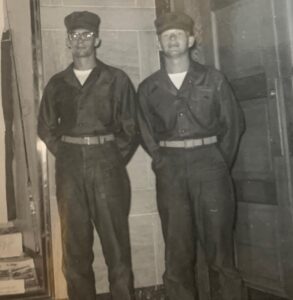
Bob graduated from boot camp in September 1963. For the first time, the drill instructors called him and the other men in his platoon Marines instead of “girls” or “ladies.” After the ceremony, Bob was given liberty for the first time, allowing him to shop in the PX and eat at a local restaurant. He spent the day celebrating with George Ransom and George’s parents, who had come to watch their son graduate. The fun lasted one day only because the day after graduation, Bob was off by bus to Camp Geiger in North Carolina for infantry training.
The first week of infantry training made it clear to Bob that as a new Marine, he was at the bottom of the pecking order. Instead of jumping right into his training, he and the other new arrivals worked in the mess hall, washing dishes, serving food, and keeping the facility clean. By the time the week ended, he couldn’t wait to get into the field.
Infantry training began when Bob met the troop handlers who would train his platoon. Both were elite reconnaissance or “recon” Marines, so everywhere they led Bob and his fellow trainees, the platoon ran and ran hard. Once they got where they were going, they learned how to assault defended positions; fire the M1 rifle and .50-calibre and M60 machine guns; throw hand grenades; and survive in the field.
The realistic training conditioned them to perform under battlefield conditions. For one drill, they had to crawl on their bellies under barbed wire while a machine gun fired live rounds over their heads. During another drill, they were released in a football field-sized area and instructed to evade capture by other Marines playing opposition force roles. At other times, small charges detonated in their vicinity until the sound of nearby explosions became routine. Above all, Bob’s handlers emphasized obedience to orders so the new Marines could react under fire rather than freeze in fear.
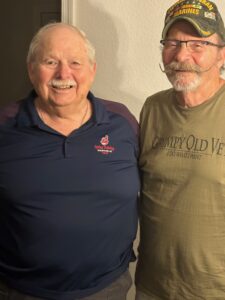
After Bob completed infantry training, he took leave at home and then reported for duty with the 2nd Shore Party Battalion at Camp Lejeune, North Carolina, on November 22, 1963. The 2nd Shore Party Battalion provided logistical support for the 2nd Marine Division, also located at Camp Lejeune. As Bob had been assigned to the 2511–Wireman and 2531–Field Radio Operator military occupational specialties (MOSs), he and the other newly arriving Marines with the same MOSs were sent to the battalion communications shack to await further instructions.
While Bob was waiting and talking to the other Marines, the first sergeant hurried in and directed them to go to the barracks, sign in, and draw their equipment, adding that President John F. Kennedy had just been assassinated. When one of the new Marines started laughing because he thought the first sergeant was joking, the first sergeant grabbed him by the throat and pushed him against a wall. Still clutching the Marine’s throat, he barked, “When I give you an order, you do it.” After that, neither Bob nor anyone else ever questioned the first sergeant’s instructions.
Once the chaos after President Kennedy’s assassination resolved, Bob was ordered back to Camp Geiger to receive specific training for his wireman and field radio operator MOSs. There he learned to install and climb telephone poles, run guide wires and communications cables, and operate field radios. The training lasted approximately two weeks and prepared him for his duties with the 2nd Shore Party Battalion.
Back at Camp Lejeune, Bob’s life settled into a routine. He woke early every morning, ate chow, and learned his duties for the day at the communication shack’s morning formation. After he completed his work, he was free to hit the gym, go to the enlisted club, or just relax. It was a welcome change from the stress of boot camp, infantry training, and MOS training. Soon, though, opportunities arose to vary Bob’s routine.
Periodically throughout the year, Marines from the 2nd Shore Party Battalion would deploy with battalion landing teams (BLTs) from the 2nd Marines to train and operate in the Caribbean or to participate in exercises with NATO allies in Europe. Bob volunteered for these events as they involved embarking on a Navy ship for about three months and practicing his wireman and radio operator skills in realistic situations ashore.
Bob deployed with BLTs to the Caribbean on June 25, 1964; April 2, 1965; and November 30, 1965. Each time, Bob loaded onto a Navy amphibious ship together with Marines and equipment from the BLT. They then sailed to the Caribbean and practiced beach assaults on Vieques Island, a Navy live-fire range near Puerto Rico. Once ashore, Bob helped set up the communications equipment and stood watch in the BLT’s communications shack. After completing the training, Bob and the BLT would reembark on their ships and serve as the ready Marine force in the Caribbean for the remainder of the deployment.
During one of these BLT deployments, Bob injured himself while installing a communications line on a telephone pole. After getting to the top of the pole, he slid down a weathered crack toward the base, all the time trying to hug the pole tightly to stop his descent. By the time he reached the bottom, one of his legs had been wrenched over his head and his chest had over 200 splinters in it. While the leg did not appear to pose an immediate concern, the splinters did, so a Navy corpsman plucked them out and put Bob on light duty until the many cuts on his chest healed.
Sometimes after they had gone ashore on Vieques Island, Bob and the rest of the BLT would observe the Navy ships conduct gunnery practice. The ships lobbed their shells at targets only a quarter to a half mile away from the BLT’s position. The explosions shook the ground around them and like at infantry training, helped condition the Marines to operating in a live-fire environment.
Once the BLT completed its beach assault training and returned to the Navy amphibious ships, Bob and the rest of the BLT’s Marines got to have some fun in the Caribbean. Over the course of his three deployments, Bob visited San Juan, Roosevelt Roads, Martinique, St. Thomas, Guantanamo Bay, Port-au-Prince (Haiti), and Caracas. His favorite was San Juan because he found some hotels there where he could play blackjack and enjoy a drink or two before returning to the cramped quarters of his ship. He also enjoyed Haiti because it felt like an exotic South Pacific island with wonderfully friendly people. Caracas furnished the most excitement, not only because he tried horse meat there for the first time, but also because the local bus driver kept dozing off while driving down the mountain back to the port of La Guaira, making for a harrowing experience.
Sometimes, even the trip back to Camp Lejeune proved harrowing. On one cruise, Bob’s ship trailed behind multiple hurricanes, making for a rough ride and a lot of sick Marines. After another ship in their company lost a couple of trucks over the side in heavy seas, all the ships turned back to San Juan until it was safe to resume the trip home.
In October 1964, Bob participated in Operation Steel Pike—the largest peacetime amphibious landing ever conducted.[1] The purpose of the exercise was to quickly deploy 28,000 Marines from the 2nd Marine Division to Spain in a NATO proof of concept and show of force. Bob crossed the Atlantic together with over 1,000 Marines on board the USS Chilton (APA-38), a World War II-era troop transport. To accommodate all the Marines, bunks were stacked nine high in the berthing spaces. Bob jokes it was so crowded on board that by the time he finished waiting in line to get his breakfast, it was time to get back in line again for lunch.
Bob landed with his unit in southern Spain much the same way they had practiced at Vieques Island. After completing the exercise, Bob’s ship made a stop in Lisbon, Portugal, which Bob particularly enjoyed because a retired Portuguese Navy chief petty officer living there invited him to have lunch with his family at their restaurant. He also got to visit Fatima, home to several religious sites important in the Catholic faith.
In April 1965, Bob was on a BLT deployment to the Caribbean with the 3rd Battalion, 6th Marines (3/6 Marines), when things turned real. After a practice landing at Vieques Island, Bob reembarked on the USS Fort Snelling (LSD-30) and, together with the other Navy amphibious ships carrying the 3/6 Marines, headed for the Dominican Republic, which was in a state of political turmoil. The situation had attracted the attention of President Lyndon B. Johnson, who was afraid a rebel movement seeking to overthrow the Dominican Republic’s military-installed leader had communist leanings.
By April 24, the situation had become an all-out civil war. Led by the USS Boxer (LPH-4), the Navy amphibious ships loaded with the 3/6 Marines and Marine Medium Helicopter Squadron 264 took station about thirty miles off the coast of the Dominican Republic on April 26 and waited for instructions.[2]
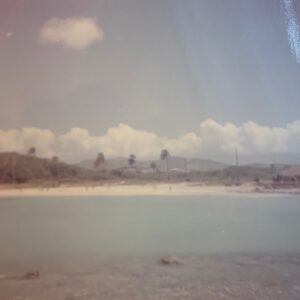
Those instructions came on the morning of April 27, and the ships closed to within five miles of the coast.[3] From his perch on the deck of the Fort Snelling, Bob watched as aircraft loyal to the government dropped bombs on rebel positions in the capital city of Santo Domingo. As the situation ashore deteriorated over the next few days, a cadre of Marines ferried ashore on helicopters to secure positions necessary to protect U.S. citizens. Finally, on the afternoon of April 29,[4] Bob’s unit launched in landing craft as part of a 1,500-Marine force for a landing at Red Beach near Haina,[5] a port city not far from Santo Domingo.
After initially reaching the rally point well off the beach, Bob’s landing craft returned alongside the Fort Snelling to load small arms ammunition. As the landing craft started to return to the rally point, Bob’s team broke open the ammunition only to find they had been given blank rounds by mistake. When they returned to the Fort Snelling to remedy the problem, they were directed to head to the beach anyway because their officers had sidearms with live ammunition and so did the tank platoon going ashore with them. Bob and his fellow Marines did as ordered, but they felt defenseless heading into a hot civil war without live ammunition.
The Marine landing force came ashore on the beaches in Haina at 5:30 p.m. Bob helped carry tank ammunition ashore before heading to his position and setting up the communications tent. He left his rifle there, which was useless anyway without live ammunition, and ran communications wires to other 3/6 Marine units. He finished his work late that evening.
Around 2:00 a.m. on April 30, Bob’s unit received orders to dig slit trenches on the beach as part of their defensive perimeter. Bob dug his trench and then stripped and cleaned his rifle because he had carried it through the beach landing. The night was so black he could barely see his hands in front of his face, but thanks to his drill instructors at boot camp, he had become so proficient at cleaning his rifle that he could do so using only his sense of touch. Finally, around 2:30 a.m., Marines delivered bandoliers of live ammunition and C-rations to Bob and the other members of his unit. Bob finally felt safe and could relax.
Bob’s sense of peace proved short-lived. At approximately 3:30 a.m., he could hear rebel forces probing the Marine perimeter. Everything remained quiet until a Marine down the line opened fire. The rebels returned fire towards Bob’s position. Bullets whizzed over his head as he pressed as deep into his trench as he could, wanting to “dig his way back to Cleveland.” He was glad he’d taken the time to clean his rifle so he could return fire, although it was so dark, he couldn’t see anything to shoot at. It was a terrifying night for Bob.
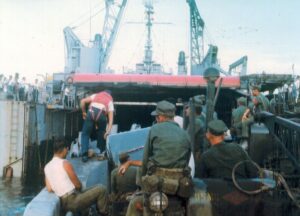
Over the course of the next few days, Bob’s position would come under fire three times, with one Marine being killed. Bob remained in the Dominican Republic for thirty-four days, helping evacuate American citizens from the war-torn country. He finally returned to Camp Lejeune on board the Fort Snelling in June after the completion of the Dominican Republic operation, which resulted in nine Marines killed and thirty wounded.[6]
Bob did one more BLT Caribbean cruise after his experience in the Dominican Republic. Then at a communication shack morning formation at Camp Lejeune in May 1966, the sergeant announced he had orders for two lance corporals and a corporal to go to Vietnam. Bob thought he was safe because his enlistment would end in June 1967. The sergeant called his name anyway as one of the two lance corporals selected. Bob objected, but it didn’t matter because the Marine Corps deemed his MOS critical. The sergeant said the North Vietnamese were targeting communications personnel so Marines like Bob were in high demand.
The news shocked Bob. Believing he would be discharged in less than a year, he and his high school sweetheart, Joan McMillan, had gotten engaged. Now he had to tell her he was going to Vietnam. He took leave in Cleveland to spend time with her and his family and then spent ten more days with Joan in California. After saying goodbye, he reported to Camp Pendleton for jungle warfare school before flying to Kadena Air Base in Okinawa, where he left his dress uniforms since he would have no need for them in Vietnam. He left Kadena the next day, arriving around 11:00 a.m. in Da Nang on June 26, 1966.
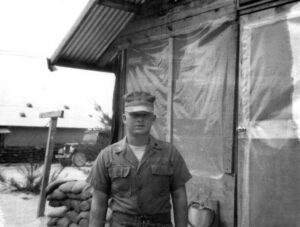
At around 3:00 that afternoon, a driver picked up Bob and took him to the headquarters for the 5th Communications Battalion, which reported directly to the III Marine Amphibious Force (MAF) in Vietnam. The headquarters was located just south of Da Nang between Marble Mountain and China Beach. Bob checked in with the Sergeant of the Guard, who arranged a bed in the barracks for him. Not knowing what else to do, Bob lay down for a nap, only to be awakened at 2:00 a.m. by Viet Cong mortars hitting the base runway. He looked outside just in time to see a helicopter gunship silencing the Viet Cong attackers. It was a scary first-day introduction to Vietnam.
Later that morning after chow, Bob was assigned to the battalion’s Radio Relay & Construction Company. At first, though, he was detailed to the I Corps headquarters in Da Nang to support the staff there by serving as a Marine Corps switchboard operator. This involved connecting calls to staff members at the headquarters and then monitoring the calls for security reasons. On one occasion, an aide for the III MAF commander—whose headquarters was also in Da Nang and used Bob’s switchboard—came in and instructed Bob to connect the general to another general stateside. The aide made the call sound urgent, so Bob put the call through right away. It turned out that the commander needed help from his friend in making arrangements for his wife’s birthday!
A call Bob monitored involved Martha Raye, a beloved actress and singer who spent much of her time visiting troops at the front during World War II, the Korean War, and the Vietnam War.[7] Colonel Maggie, as she was known by the Marines, wanted to get into the field to be with the Marine “grunts” doing the fighting. The III MAF commander didn’t want to approve her request out of fear for her safety. She convinced him in the end, and he allowed her to visit Marines in the field despite the danger.
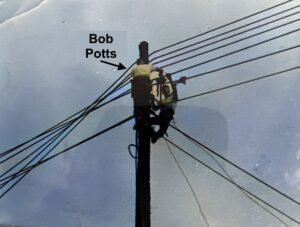
After spending almost a month as a switchboard operator, Bob returned to the 5th Communications Battalion headquarters. This time, he joined a crew of up to eight Marines installing telephone poles and communications cables to connect the headquarters with Marine units in the field. At first, this involved digging the holes for the poles using an A-frame auger and installing the poles. Bob and his team would then return the next day to run a messenger wire between the poles, and then again the following day to run the communications cable itself. As this three-day evolution exposed them to potential ambush by enemy troops, they consolidated days two and three so that the messenger wire and the communications cable were installed on the same day.
To install the messenger wires and cables, Bob had to climb thirty-five feet to the top of the poles and lash the wires in place. Whenever he did that, he was exposed to potential enemy fire. The closest he came to getting hit occurred when a nearby tank fired its .50-calibre machine gun and some of the rounds ricocheted off the water in a rice paddy and hit the pole he was on. Other times, he could see firefights taking place a short distance away, but he never came under fire. Exposed and with his rifle stored securely in his truck while he worked on the poles, he considered himself lucky.
When Bob made corporal in 1967, he took charge of his own installation crew. His primary responsibility was pole maintenance, which meant repairing broken or damaged poles and communications cables. What kept Bob’s team busy was that the Viet Cong, and even some Army of the Republic of Vietnam (ARVN) soldiers, used the poles for target practice, so they often had to be repaired or replaced. When on a repair mission, Bob’s team had to be wary of a potential ambush by the Viet Cong who sometimes damaged poles or communications cables and then waited to attack anyone who showed up to repair them. For this reason, communications lines were most often run along roads and open areas and rarely deep into the jungle.
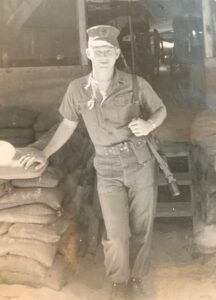
Although Bob completed his pole maintenance responsibilities during daylight hours, his work didn’t end there. At night, he often had to stand guard duty as Corporal of the Guard at one of three bunkers located on the base perimeter. One of the bunkers was on the beach near the Sacred Heart Orphanage run by a mother superior. Bob sometimes saw her outside the orphanage saying her rosary while carrying a submachine gun—she would do anything to protect the children in her care. That also meant Bob’s bunker couldn’t fire rifles in that direction out of fear they might hit the orphanage, so Bob carried a shotgun in case the enemy got close.
The two areas Bob had the most concern for were the bunker at the opposite end of the beach from the Sacred Heart Orphanage and the beach itself. The bunker of concern was close to a compound for the Army Strategic Communications Command, or STRATCOM. Occasionally, small arms fire came from that direction, although Bob was not sure if it was enemy fire or return fire from the Army. As for the beach, Bob had been told the North Vietnamese had frogmen ready to crawl out of the South China Sea to infiltrate the Marine position, so Bob always kept a watchful eye in that direction.
One night when Bob was conducting his rounds as Corporal of the Guard, he found a Marine sleeping on watch. That was a serious offense because he put the entire base at risk. In fact, the Viet Cong had been known to sneak up to the base perimeter and change the direction of Claymore mines, so they faced the base defenders instead of any would-be attackers. This gave Bob no choice but to put the Marine on report so he would face appropriate disciplinary action.
In February 1967, Bob saw Nancy Sinatra perform her hit song, “These Boots Are Made for Walkin’,” at the Da Nang airport. He and everyone else attending the show loved her, especially because she did not allow security to chase off soldiers who had climbed on stage and danced along to her music. For a moment, the show allowed Bob to forget he was far from home in Vietnam.
By the end of April 1967, Bob had thirty days left on his tour in Vietnam. To minimize the chance of anything happening to him, Bob’s commanding officer took him out of the field and assigned him as a courier. This entailed Bob being issued a .45-calibre pistol and having a courier pouch with Top Secret information handcuffed to his wrist. He flew with the material on a C-130 from Da Nang to Okinawa, where he turned over the pouch and the pistol and received three days of liberty out in town. When he returned at the end of the three days, he reversed the process by arming up and carrying a courier pouch back to Da Nang. He completed two courier missions to Okinawa before his time in Vietnam finally came to an end.
On May 31, 1967, Bob presented his orders home at the Da Nang airport and boarded a plane for Okinawa. From there, he flew to Marine Corps Air Station El Toro in California for his last ten days in the Corps. He was put in charge of keeping the intake office clean, which didn’t take much time each day. Then he was off celebrating with some buddies he’d run into from boot camp. In addition to hitting the local watering holes, they made two memorable trips to Los Angeles.
On June 10, 1967, the personnel office called Bob to tell him his discharge papers were ready. He received a final paycheck for just over $100 and travel money to get him home to Cleveland. He flew standby and in uniform, which paid off because after he took his seat at the back of the airplane, a stewardess signaled for him to follow her, and she reseated him in first class together with an Army soldier. The stewardesses made sure Bob and the soldier had plenty to drink on their flight home.
When Bob got off the plane, he found Joan, his parents, and all his brothers and sisters waiting for him. He could not have been happier. He then went home, packed away his uniform, started working for Bell Telephone on June 24, married Joan on August 12, and got on with his life.
Bob worked at Bell Telephone for eleven months before taking a sales position with the Western & Southern Life Insurance Company in May 1968. Four months later, Joan gave birth to their daughter, Kimberly Ann, to be followed by their son, Joseph Robert, in March 1970. Bob was promoted from agent to manager and stayed with Western & Southern Life for six years before jumping to Nationwide Insurance in 1974. Eventually, he combined his insurance agency with his son’s and retired at age 60.
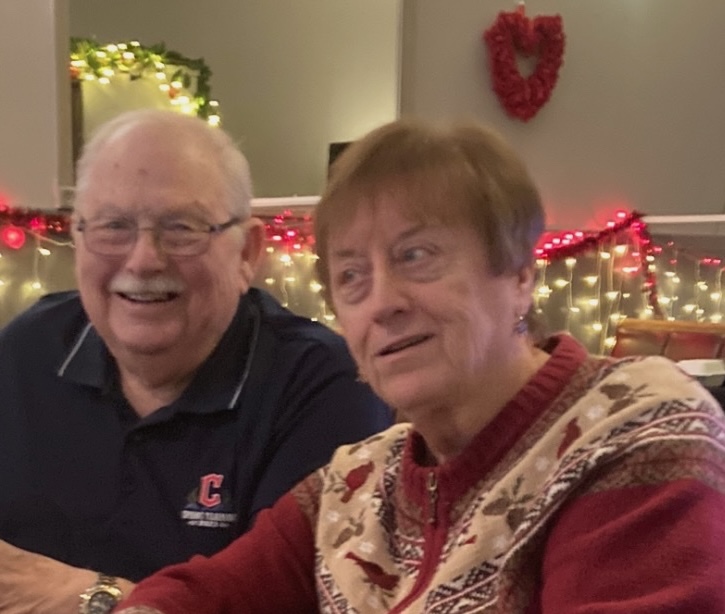
Bob and Joan are now living out their retirement in Olmsted Falls, Ohio. What Bob has not retired from, though, is his service to veterans. In addition to being a member of American Legion Post 91 in Berea, the Marine Corps Legion in Brookpark, and Vietnam Veterans of America Chapter 249 in Cleveland, Bob has been a commissioner of the Cuyahoga County Veterans Service Commission for twenty-two years. In this role, he helps direct financial assistance, veterans service officers, and community outreach to veterans and their families across Cuyahoga County. As someone who struggles with the aftereffects of Agent Orange and other service-connected disabilities, Bob understands better than most how crucial these benefits are.
Voices to Veterans is proud to salute Corporal Robert Potts, U.S. Marine Corps, for his many years of service to the Corps and to his fellow veterans. Not only did he serve his country in time of war both in the Dominican Republic and Vietnam, but he also continues to serve his former comrades-in-arms by ensuring the services they need are available to them. We thank him for all he has done and wish him fair winds and following seas.
If you enjoyed Bob’s story, please sign up for the Voices to Veterans Spotlight monthly newsletter by clicking here. Once each month, you’ll receive a new written veteran’s story directly in your mailbox. Best of all, it’s free and you can unsubscribe at any time.
[1] Wikipedia contributors, “Operation Steel Pike,” Wikipedia, The Free Encyclopedia, last modified October 31, 2025, https://en.wikipedia.org/wiki/Operation_Steel_Pike.
[2] Edwin H. Simmons, “A Marine’s View of the Dominican Intervention,” in Caribbean Tempest: The Dominican Republic Intervention of 1965, Colloquium on Contemporary History, January 9, 1990, Naval History and Heritage Command, https://www.history.navy.mil/research/library/online-reading-room/title-list-alphabetically/c/caribbean-tempest.html; James A. Dare, “Dominican Diary,” Proceedings 91, no. 12 (December 1965), https://www.usni.org/magazines/proceedings/1965/december/dominican-diary; Jack K. Ringler and Henry I. Shaw Jr., U.S. Marine Corps Operations in the Dominican Republic, April–June 1965, Occasional Paper (Washington, DC: Historical Division, Headquarters, U.S. Marine Corps, 1970; reprinted 1992), 14, https://www.usmcu.edu/Portals/218/U_S_%20Marine%20Corps%20Operations%20In%20The%20Dominican%20Republic%20April%20-%20June%201965.pdf.
[3] Dare, “Dominican Diary;” Ringler and Shaw, U.S. Marine Corps Operations in the Dominican Republic, 16.
[4] Simmons, “A Marine’s View of the Dominican Intervention;” Ringler and Shaw, U.S. Marine Corps Operations in the Dominican Republic, 20. Note that other official records indicate the landing took place on April 30, 1965: Foreign Relations of the United States, 1964–1968, Volume XXXII, Dominican Republic; Cuba; Haiti; Guyana, Document 99, “Memorandum From Secretary of Defense McNamara to President Johnson,” Washington, May 26, 1965, “Build-up of U.S. Forces in the Dominican Republic,” 247, https://history.state.gov/historicaldocuments/frus1964-68v32/d99.
[5] Dare, “Dominican Diary.”
[6] Simmons, “A Marine’s View of the Dominican Intervention.”
[7] Wikipedia contributors, “Martha Raye,” Wikipedia, The Free Encyclopedia, last modified June 3, 2026, https://en.wikipedia.org/wiki/Martha_Raye.